

Project Overview
- BED STRENGTH : 212 Beds.
- HOSPITAL SPECIALISATION: Radiation Oncology, Nuclear Medicine, Chemotherapy, Oncology Consultation and Inpatient Care.
- PLANNING CONCEPT: Integrated oncology planning with specialised radiation-controlled zones, advanced diagnostic and treatment facilities, coordinated clinical circulation and inpatient accommodation.
- AMRD'S CONTRIBUTION: Healthcare Planning, Architectural Planning & Design, Oncology Department Planning, Radiation Bunker Planning Coordination, Nuclear Medicine Department Planning, Clinical Workflow & Circulation Planning, Medical Equipment Coordination and Multidisciplinary Design Coordination.
Oncology Super-Speciality Hospital | Radiation Oncology | Nuclear Medicine | Chemotherapy & Integrated Cancer Care
Integrating Advanced Radiation Oncology, Nuclear Medicine & Comprehensive Cancer Care
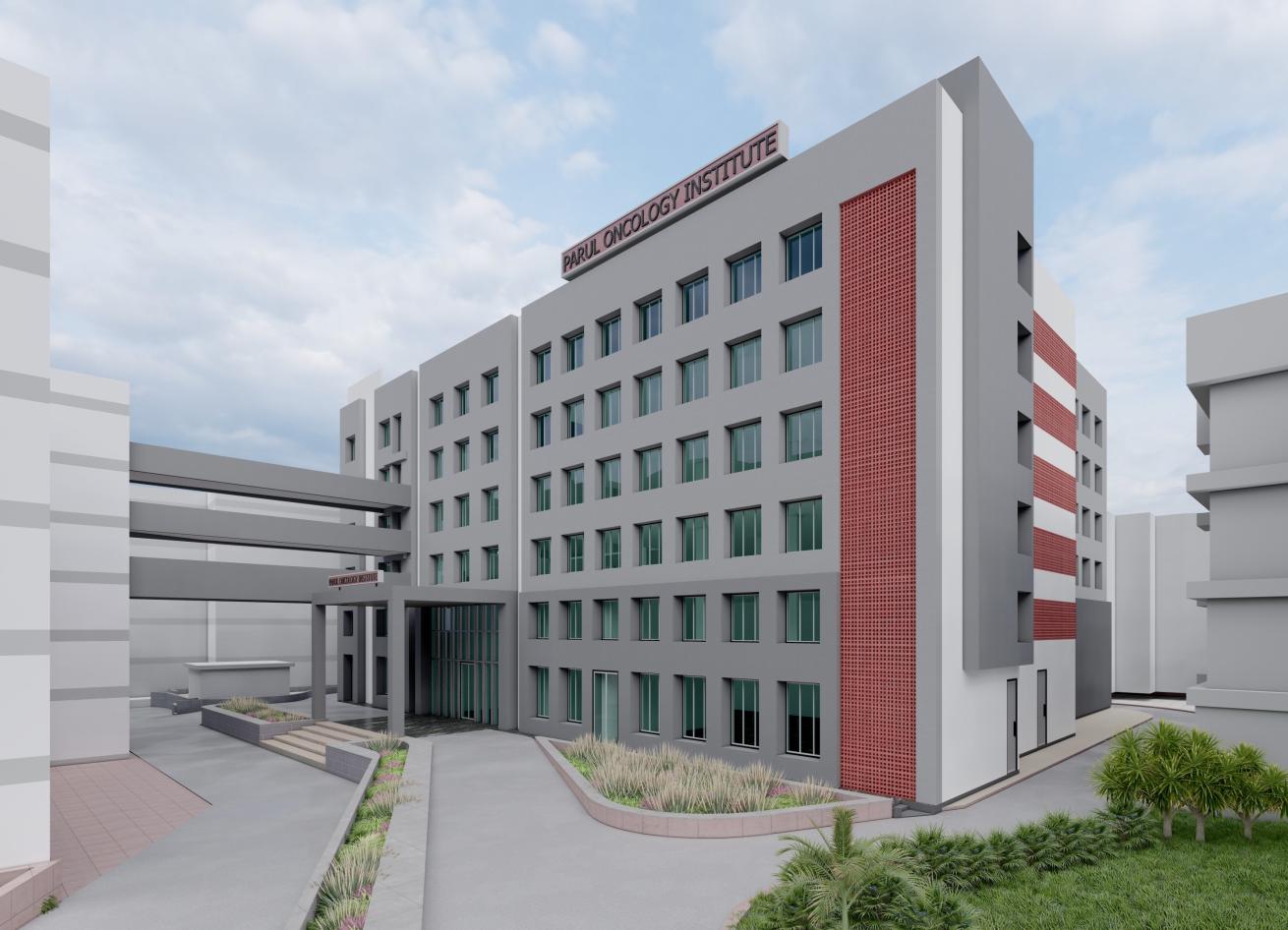
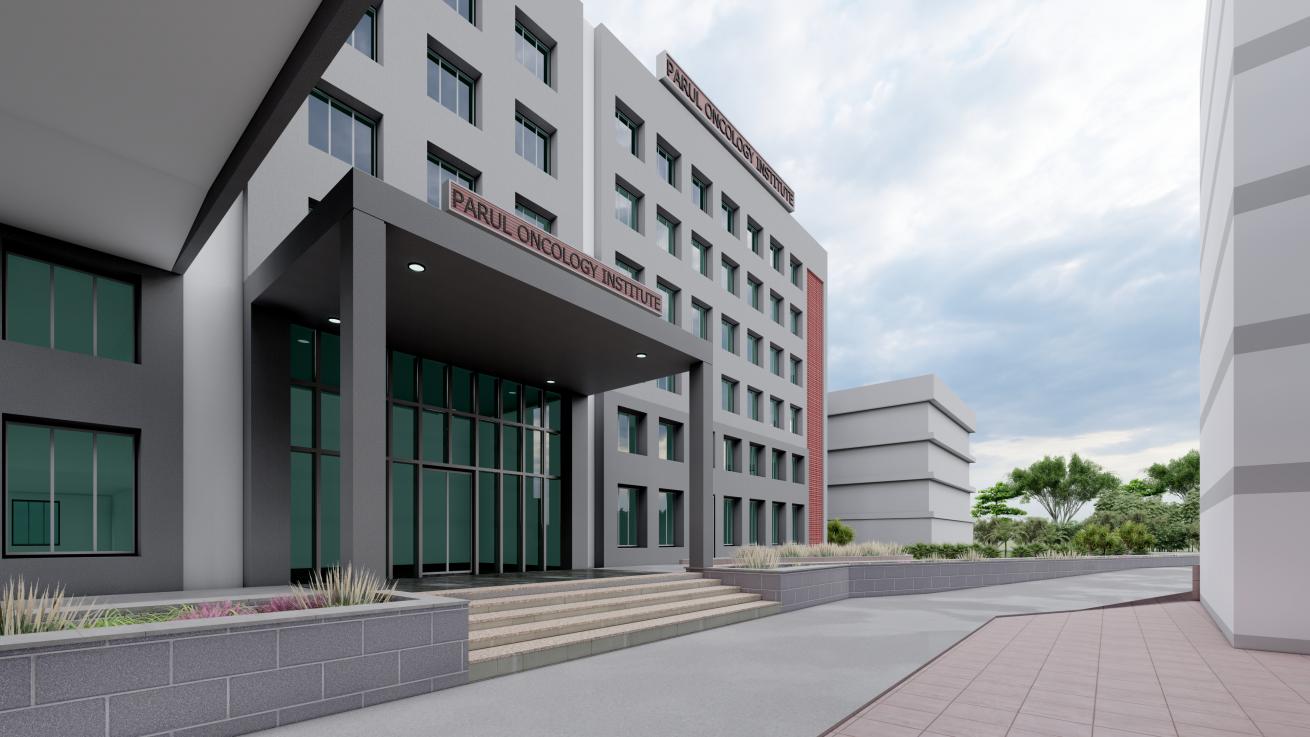
Parul Oncology Center, Vadodara, is a 212-bed planned oncology super-speciality hospital developed for Dr. Komal Patel, bringing together advanced radiation therapy, nuclear medicine, chemotherapy, diagnostic imaging, specialist consultation and inpatient care within a coordinated healthcare environment.
AMRD's involvement in the project concluded in 2025. The architectural planning integrates multiple specialised treatment modalities within one hospital, establishing a coordinated framework for cancer diagnosis, treatment and continuing care.
THE VISION
The vision for Parul Oncology Center was to establish a comprehensive oncology institution where patients could access advanced cancer diagnosis and treatment without depending on multiple healthcare facilities.
The hospital was conceived to bring radiation oncology, nuclear medicine, chemotherapy, specialist consultations, procedures and inpatient services together within one integrated clinical environment.
For AMRD, the architectural challenge was to accommodate these technically demanding departments while maintaining appropriate clinical relationships, controlled circulation and efficient use of space.
The planning approach therefore focused on connecting the different stages of cancer care while responding to the specialised infrastructure and safety requirements of each treatment modality.
PLANNING AN INTEGRATED ONCOLOGY ENVIRONMENT
The project required coordinated planning of several departments with significantly different technical and operational requirements.
Radiation therapy introduces requirements for shielding, equipment installation and controlled access, while nuclear medicine involves specialised imaging infrastructure, radiopharmaceutical handling considerations and controlled patient movement.
Chemotherapy and inpatient services require their own clinical environments, nursing support and patient-care arrangements.
AMRD's planning strategy focused on organising these interdependent functions into identifiable clinical zones, maintaining appropriate separation between public, patient-care and radiation-controlled areas.
The resulting arrangement brings specialised treatment, diagnosis and consultation into functional relationships while accommodating the individual requirements of each department.
RADIATION ONCOLOGY & ADVANCED TREATMENT INFRASTRUCTURE
A defining feature of the hospital is the provision of three radiation therapy bunkers, establishing substantial infrastructure for advanced radiation oncology services.
These bunkers form part of the principal treatment zone on the Ground Floor, supported by simulation facilities and associated oncology services.
Their integration requires careful consideration of radiation shielding, equipment accommodation, structural provisions, controlled access and specialised engineering infrastructure.
The planning also considers the relationship between radiation treatment, simulation, consultation and diagnostic imaging, recognising the importance of coordinated clinical workflows throughout the treatment-planning process.
The provision of three bunkers establishes a framework for substantial radiation treatment capacity and the institution's longer-term oncology programme.
INTEGRATING NUCLEAR MEDICINE & DIAGNOSTICS
The Ground Floor is organised as the principal diagnostic and specialised cancer-treatment hub.
Alongside the radiation therapy bunkers and simulation facilities, the level incorporates 12 Oncology OPDs, a Minor Operation Theatre and a dedicated Nuclear Medicine Department with PET-CT and SPECT facilities.
Concentrating these services on one level establishes close functional relationships between specialist consultation, advanced imaging, treatment planning and radiation therapy.
The Nuclear Medicine Department introduces additional planning considerations associated with radioactive materials, specialised equipment, controlled circulation and departmental safety requirements.
Its integration with radiation oncology is an important aspect of the project, providing the architectural framework for coordinated diagnostic and treatment services within one institution.
CHEMOTHERAPY, IODINE THERAPY & INPATIENT CARE
The First Floor accommodates specialised cancer-treatment and inpatient facilities, including Iodine Therapy, a Chemotherapy Room, Chemotherapy Ward, General Ward and Medical Records facilities.
The inclusion of iodine therapy requires consideration of radiological safety and controlled patient-care arrangements, while chemotherapy facilities respond to the requirements of treatment administration, nursing observation and patient support.
The Second Floor extends the hospital programme through General Medicine and Respiratory Medicine Wards, together with consulting rooms, a Demonstration Room and Procedure Room.
These facilities support the broader medical requirements of oncology patients while accommodating additional specialist consultation, clinical procedures and teaching activities.
Together, the inpatient and treatment areas form part of the hospital's planned 212-bed capacity, allowing different levels of care to be accommodated within the larger oncology programme.
COORDINATING SPECIALISED CLINICAL WORKFLOWS
A central planning consideration was the relationship between highly specialised treatment facilities and the broader patient-care environment.
The concentration of radiation oncology, simulation, nuclear medicine and consultation facilities on the Ground Floor supports coordinated access to these interdependent departments.
Chemotherapy, iodine therapy and inpatient functions are distributed across the upper clinical levels, establishing distinct treatment and accommodation zones.
The planning responds to the movement of patients, medical professionals and supporting services while recognising the controlled access and infrastructure requirements of radiation-related departments.
This approach demonstrates the importance of integrating clinical workflow planning with architectural design and specialised medical equipment coordination in a comprehensive oncology institution.
THE INTENDED OUTCOME
Parul Oncology Center was planned as a major oncology super-speciality institution combining three radiation therapy bunkers, nuclear medicine, advanced imaging, chemotherapy, specialist consultation and inpatient services within one coordinated healthcare facility.
The project demonstrates how specialised cancer-treatment technologies and supporting clinical departments can be integrated through carefully organised functional zoning, controlled circulation and infrastructure planning.
With a planned capacity of 212 beds, the development is intended to strengthen access to comprehensive cancer care in Vadodara while providing a framework for advancing oncology treatment and related medical services.
Planning that connects advanced cancer treatment with coordinated clinical care.
Integrating radiation oncology, nuclear medicine and specialised medical infrastructure.
A comprehensive oncology institution designed to bring diagnosis, treatment and continuing care together.